
SEED, 2nd International Conference on Sustainable Energy Education
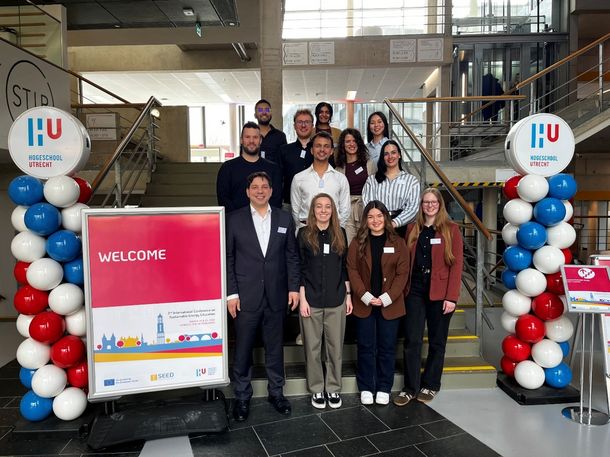
The Sustainable Technologies Laboratory is part of the SEED (Sustainable Energy Education) research project. As part of the project, the Second International Conference on Sustainable Energy Education (SEED 2026) took place in Utrecht from March 24th to 25th, 2026. The laboratory was represented by Prof. Dr.-Ing. Semih Severengiz, Dr. Erik A. Recklies, Loredana Tiedke, Aizhan Ilyassova, Mansi Mehta, Noman Hanifa, Lasse F. Maddey, and students Laura Semrau, Eric Faulhammer, Rieke Huesmann, Anita Thaqi, Stella Vucemilovic.
SEED believes that education is crucial to addressing climate change and transitioning to sustainable energy. The project encourages universities and vocational training institutions, along with their regional partners, to develop high-quality educational programs in the energy sector. The aim is to increase the number of qualified professionals, ensure that study programs align with labour market requirements and support the development of new energy systems, products and technologies.
The Second International Conference on Sustainable Energy Education builds on the success of the first conference and further develop a global learning community that shares knowledge, creates opportunities and develops a shared vision for sustainable education. The conference is intended for all stakeholders in the energy sector, including universities, vocational training institutes, industry, authorities, public institutions, non-governmental organisations and foundations.
The Sustainable Technologies Laboratory contributed the following to the conference: 5 academic papers; 2 expert articles; 2 student posters; and 7 SEED project progress posters.
Our Sessions and Presentations
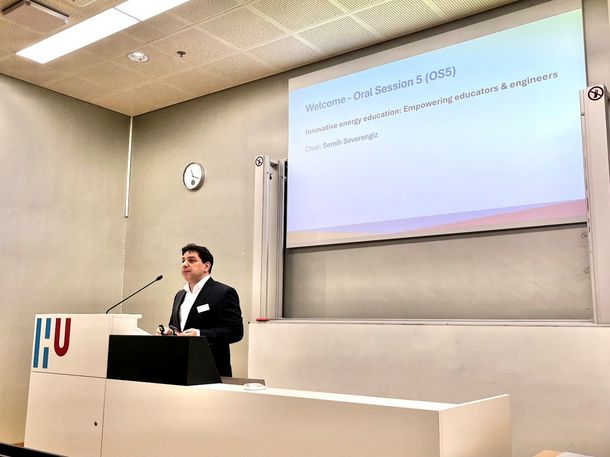
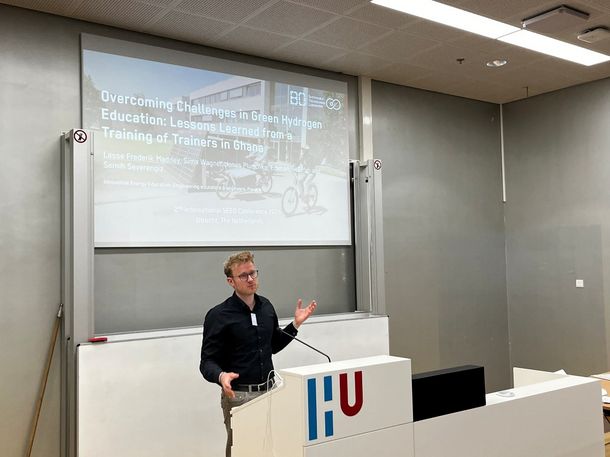
Prof. Dr.-Ing. Semih Severengiz chaired a session on “Innovative energy education: Empowering educators & engineers” (Fig.2). At this session, Lasse F. Maddey presented the paper “Overcoming Challenges in Green Hydrogen Education: Lessons Learned from a Training of Trainers in Ghana”, co-authored by Sima Wagner and Semih Severengiz (Fig.3). The study examined a training of trainers (ToT) conducted by the Green Hydrogen for Decentralized Energy Systems in Sub-Saharan Africa (GH2GH) project on the first green hydrogen system in Ghana. The paper provides insights into the challenges of conducting ToTs in the GH₂ field in the region and suggests solutions for developing ToTs.
Aizhan Ilyassova and Mansi Mehta co-chaired a session “Innovative energy education: Advancing engineering education.” Noman Hanifa and Aizhan Ilyassova co-chaired a session on “Innovative energy education: Reimagining energy education”.
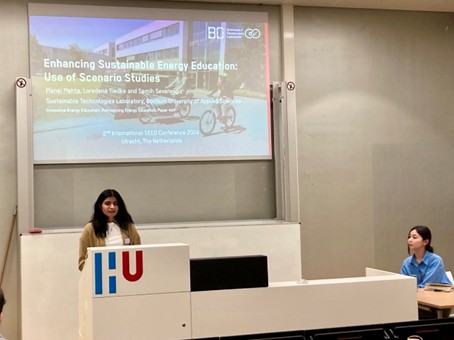
In the latter session, Mansi Mehta presented the paper “Enhancing Sustainable Energy Education: Use of Scenario Studies”, co-authored by Loredana Tiedke and Semih Severengiz (Fig.4). This paper presents a scenario study based on the Ruhr region of Germany, exploring how renewable energy expansion and structural change may influence the regional education landscape by 2040. The study demonstrates empirical insights and the value of scenario methodology as a didactic tool in sustainability and energy education. Engaging learners in systems thinking, foresight, and collaborative decision-making through scenario-based learning prepares future professionals to respond to and actively shape change in the energy sector.
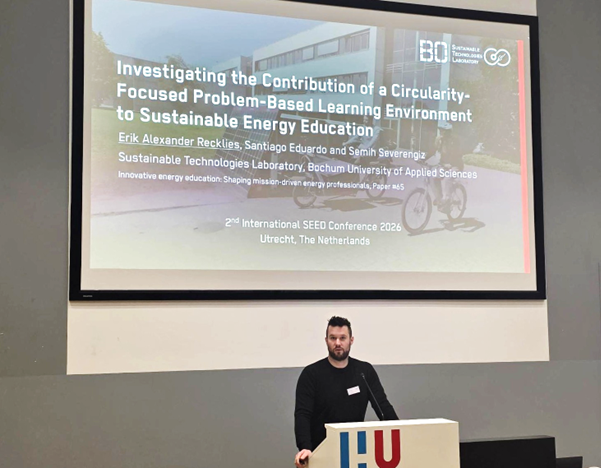
Dr. Erik A. Recklies presented the paper “Investigating the Contribution of a Circularity-Focused Problem-Based Learning Environment to Sustainable Energy Education”, co-authored by Santiago Eduardo and Semih Severengiz (Fig.5). The paper stems from the CIRCLE project, which offers a novel problem-based learning environment that incorporates circular design principles into higher education sustainability courses through analytical and practical applications. The paper illustrates how CIRCLE can furthermore successfully contribute to sustainable energy education. Using the example of a proton exchange membrane fuel cell, the paper details the extent to which participating students assess and enhance product circularity while simultaneously acquiring theoretical knowledge of key facts, central concepts, and relevant energy-related technologies, as well as practical competencies.
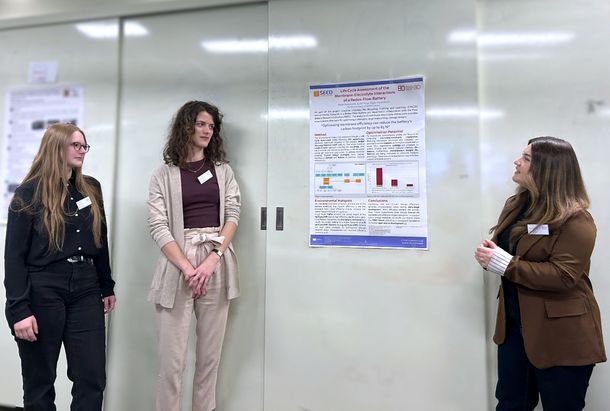
Conference attendees also had the opportunity to familiarise themselves with the results of the aforementioned student project on proton exchange membrane fuel cells by viewing the poster entitled 'LCA of the Membrane-Electrolyte Interactions of a Redox-Flow Battery', presented by CIRCLE students Rieke Huesmann, Anita Thaqi and Stella Vucemilovic (Fig.6).
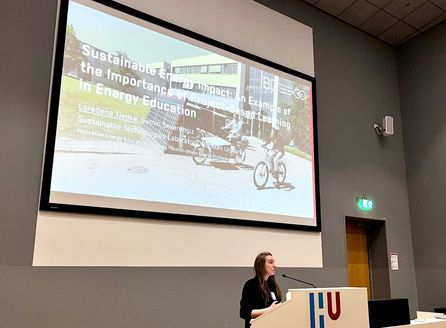
Loredana Tiedke presented the paper “Chatbottutor for Higher Education – Experimental Design for Optimizing Technical Accuracy”, co-authored by Linda Becker, Michele Martin and Semih Severengiz The study presents a privacy-preserving, on-premises chatbot tutor based on large language models (LLMs) for a university course focusing on energy- and sustainability-related tasks that can provide personalized, continuous feedback. Loredana Tiedke also presented the expert article “Sustainable Energy Impact – An Example of the Importance of Project-Based Learning in Energy Education”, co-authored by Semih Severengiz (Fig.7). The article explores how research-integrated project courses can transform sustainable energy education by immersing students directly in ongoing scientific research. Using the “Sustainable Energy Impact” project seminar (SEI) as a case study, the article demonstrates how interdisciplinary teams address real-world challenges in hydrogen and solar technologies while developing technical expertise and collaborative skills.
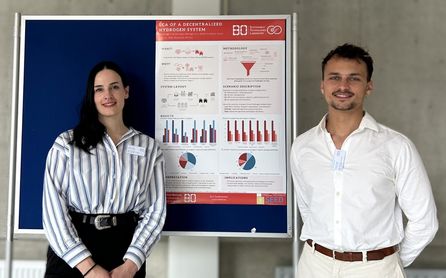
Laura Semrau and Eric Faulhammer, students in the aforementioned SEI project seminar, presented their poster, "LCA of a Decentralized Hydrogen System" (Fig. 8). In it, they demonstrate the background, methodology, and results of the life-cycle assessment of a hydrogen energy storage system in a decentralized mini-grid in Sub-Saharan Africa.
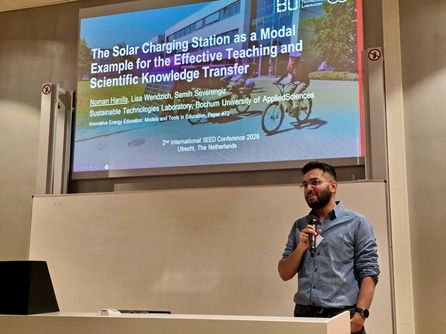
Noman Hanifa presented the paper “Environmental Impact of Conceptual Green Hydrogen Storage into a Solar Charging Station for Light Electric Vehicles”, co-authored by Naren Matesha, Nora Scheltea and Semih Severengiz. The study examined potential solutions by analyzing an off-grid solar charging station for an electric moped using empirical data from a living lab. The authors' preliminary findings suggest that hydrogen storage could be an environmentally favorable option for off-grid solar charging stations. Noman Hanifa presented also an expert article “The Solar Charging Station as A Model Example for Effective Teaching and Scientific Knowledge Transfer”, co-authored by Lisa Wendzich and Semih Severengiz (Fig.9). In this article, the authors showcase the journey of a solar charging station, that was designed by students and has grown into a flagship example of successful scientific project acquisition, regional replication, and hands-on knowledge transfer.
The 2nd SEED Conference 2026 Proceedings are available at https://seedconference2026.eu/proceedings/.
SEED Project: Good Practices Adopted by Region
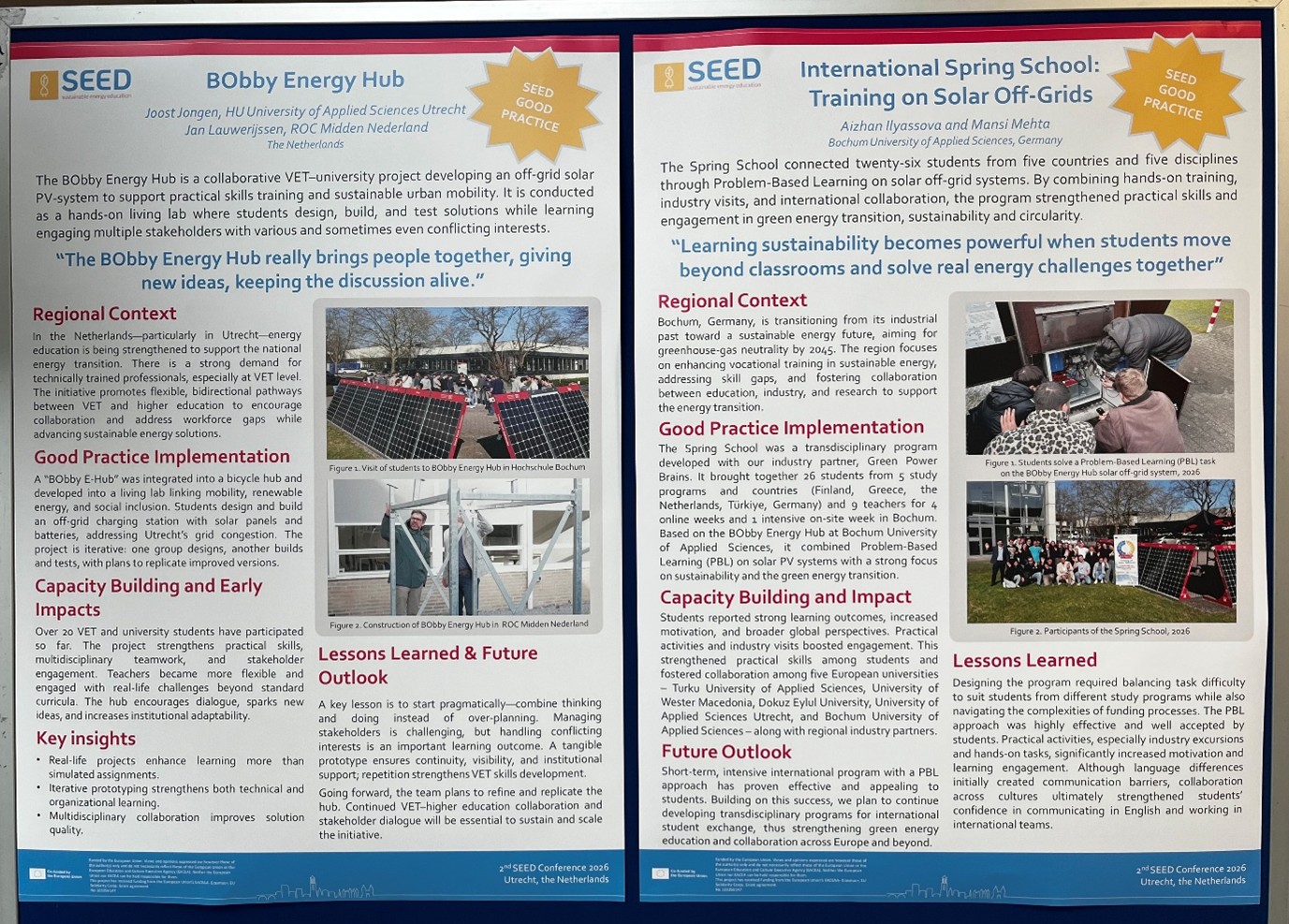
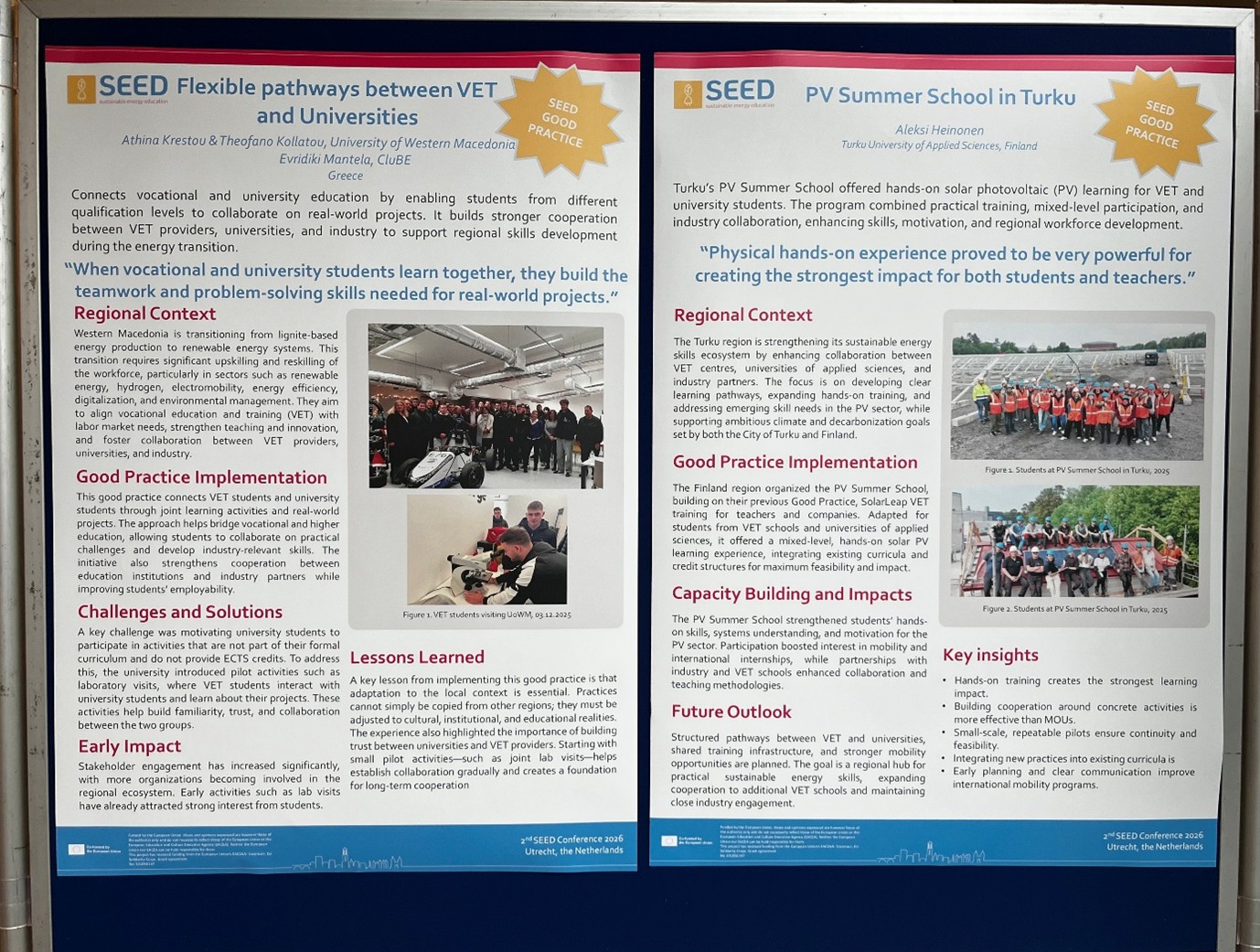
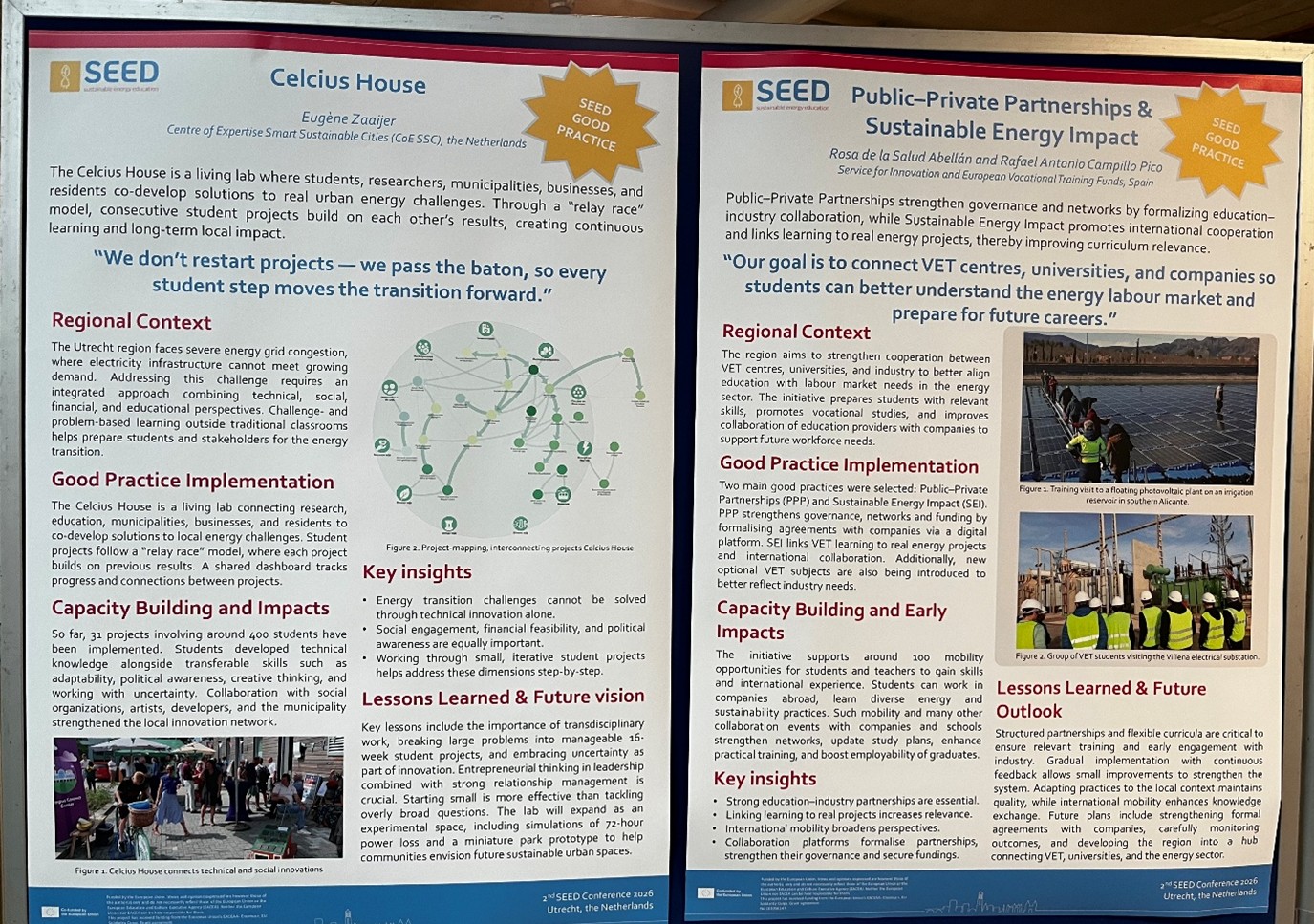
The Sustainable Technologies Laboratory is leading Work Package 4 (WP4). Regional Good Practices on Teaching & Learning, Cooperation & Partnership, and Governance of the SEED project. One of the final tasks for all project regions (Greece, the Netherlands, Finland, Spain, and Germany) was to select a good practice from another region and adapt it to their own regional context and needs. The laboratory prepared seven posters on the replicated or improved good practices from all the SEED regions (Fig.10-12):
- International Spring School: Training on Solar Off-Grids, Germany
- BObby Energy Hub, the Netherlands
- Flexible Pathways between VET and Universities, Greece
- PV Summer School in Turku, Finland
- Celcuis House, the Netherlands
- Public-Private Partnerships and Sustainable Energy Impact, Spain
- Vocational Training Digitalization Plan, Greece.
Laboratory members seized the opportunity to engage with the international research and professional community and establish valuable contacts. In addition to the presentations, they participated in poster sessions, workshops, and a conference dinner. The conference program provided a platform to present current research findings, discuss innovative teaching methods, and work together to find solutions to the challenges of sustainable energy education.
The Sustainable Technologies Laboratory is pleased to have participated in the Second International Conference on Sustainable Energy Education to promote sustainable education and take another step toward a future without fossil fuels. We are now looking forward to the Third International SEED Conference, which will take place in Bochum in 2028!