
Actuators R&D Laboratory
Welcome to the website of the Actuators R&D Laboratory.
The work in this laboratory focuses on the development, construction, and characterization of actuators, particularly electromagnets and smart actuators.
Methods
- We use the OpenModelica Connection Editor (OMEdit) for magnetic circuit design and dynamic system simulation.
- We use FEMM 4.2 for finite element analysis of magnetic circuits.
- We use Autodesk Inventor for mechanical design.
Equipment
- A small, programmable winding machine (Wey Whang WH800(i)) is available for building coils.
- Actuators are controlled by a four-quadrant amplifier (Toellner TOE 7621), which is controlled via a function generator (Hameg HMF 2550).
- Quasi-static force-displacement curves can be recorded using the tensile testing machine (Zwick/Roell Z020 TN) available in the Materials Teaching Laboratory, equipped with a 100 N load cell.
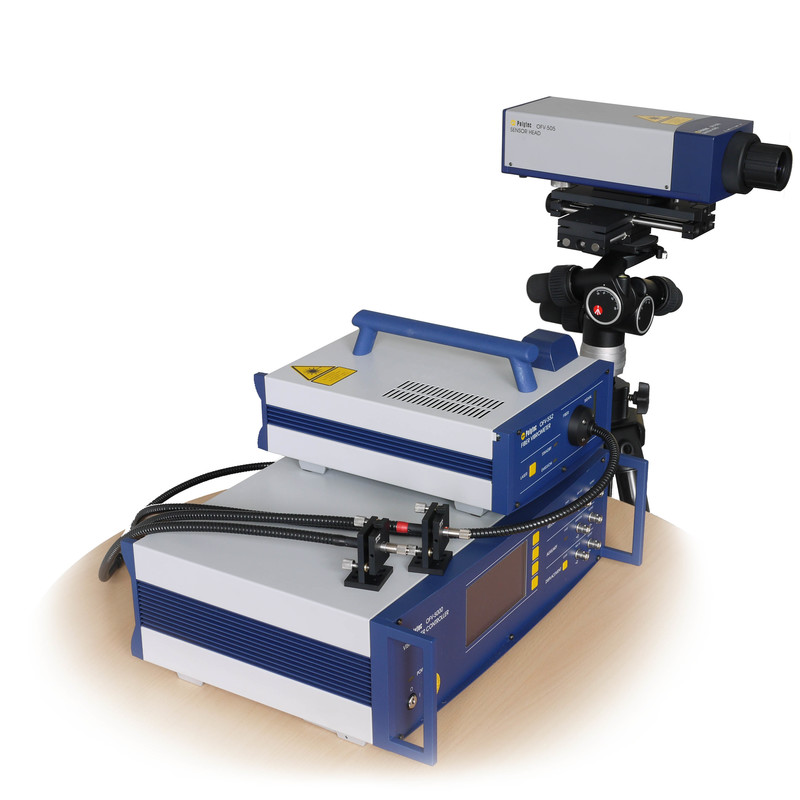
- Dynamic displacement-time curves can be recorded using a laser Doppler vibrometer (Polytec OFV-5000 controller with Polytec OFV-505 single-point optics). With a usable velocity range of up to 10 m/s, it is possible even for very fast switching actuators to measure both the dynamics of the nominal motion and to quantitatively record (generally unwanted) bounce. Since, particularly in continuous switching operation, both the moving and the nominally stationary parts of the component under investigation begin to vibrate, the ability to focus the measurement on the actual relative motion using a two-point optical system (Polytec OFV-552-2) is of particular importance.
Downloads
You can find this information in a printer-friendly format in our flyer (presently available in German only).
Contact Information
The laboratory is located in Room 1.42 and is affiliated with the Physics and Materials research group. If you have any questions, please contact Prof. Dr. Herbert Schmidt or Dr. Silvia Hacia.