

International Collaboration: Research Exchange with the University of Electro-Communications, Tokyo
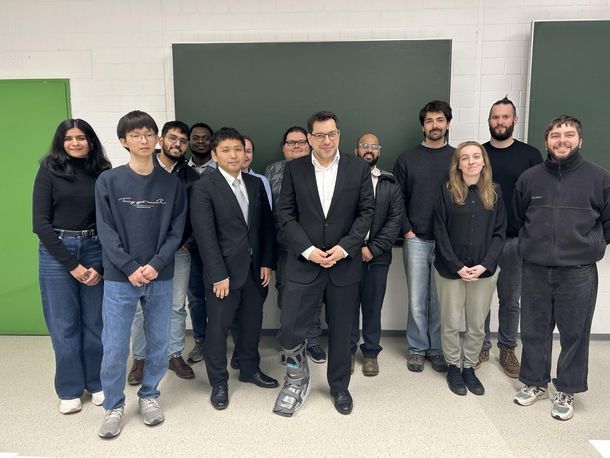
Visit by Prof. Yuki Kinoshita and Kazufumi Koike to the Sustainable Technologies Laboratory
On November 2, 2026, the Sustainable Technologies Laboratory welcomed Prof. Yuki Kinoshita and his master’s student Kazufumi Koike from the University of Electro-Communications in Tokyo for a visit. Building on the long-standing relationship between Prof. Kinoshita and Prof. Semih Severengiz, the afternoon was devoted to a professional exchange on current research projects and the question of how collaboration can be deepened in the future. The visit took place in an open and collegial atmosphere.
To begin, the Sustainable Technologies Laboratory presented its main research areas and current projects. Prof. Kinoshita and Kazufumi Koike then presented Prof. Kinoshita’s laboratory at the University of Electro-Communications, as well as selected completed and ongoing research projects. Prof. Kinoshita’s research focuses on sustainable production and circular supply chains. The focus is on decision-making models that simultaneously take ecological and economic goals into account, for example, in the disassembly and remanufacturing of products or in the design of global supply chains under a CO₂ pricing scheme. Additionally, Kazufumi Koike presented his work on fraud detection in damaged vehicles, which combines sensor technology and AI models to identify damage and potential tampering based on data.
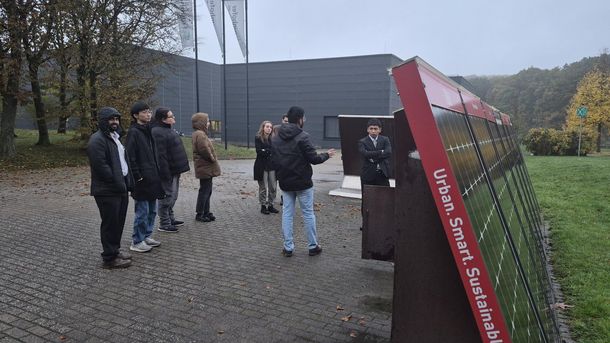
Afterward, the group headed outside to the Energy Hub, the solar charging station for micromobility that is firmly integrated into the university campus. Following a detailed explanation of its structure and operation, participants discussed technical metrics, areas of application, and opportunities for optimization.
To wrap up, everyone gathered in the lab for coffee to reflect on the afternoon’s experiences and discuss potential collaborative activities, such as student and researcher exchanges and joint publications. The discussion revealed a wide range of areas for collaboration, particularly in the circular economy, micromobility, and data-driven methods.
We look back on an exciting and productive afternoon and look forward to further expanding our collaboration with the University of Electro-Communications.


