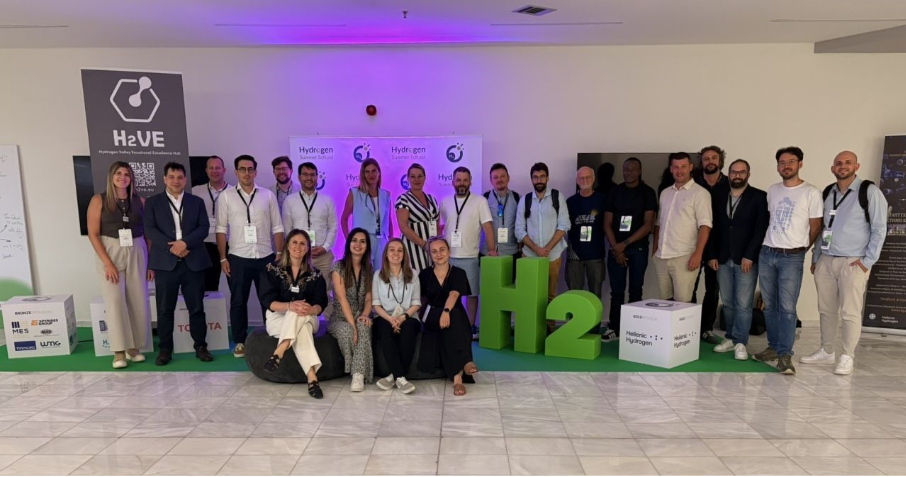

International Collaboration: 4th Hydrogen Summer School 2026 in Kozani, Greece
As part of the Erasmus+ project Hydrogen Valley Vocational Excellence Hub (H2VE), the fourth Hydrogen Summer School took place in Kozani, Greece, from June 29 to July 3, 2026. The program featured a wide range of lectures and site visits focusing on hydrogen technologies, hydrogen ecosystems, and vocational training in the hydrogen sector. The Summer School was jointly organized by CluBE (Cluster of Bioeconomy and Environment of Western Macedonia), the University of Western Macedonia, and the Region of Western Macedonia, as part of the Erasmus+ projects H2VE and Green Skills for Hydrogen. CluBE is a Kozani-based organization that brings together stakeholders, research institutions, and companies in the fields of bioeconomy and the environment; it has been a project partner of the Laboratory for Sustainability in Technology for many years. In addition to representatives from universities and research institutions, numerous industry partners and associations from the European hydrogen sector also participated, giving the week a distinctly practical focus. Jona Kreutz and Nikolas Biletic, students in the “Mechatronics” bachelor’s program at Bochum University of Applied Sciences—which is designed to complement their vocational training—participated in the Summer School on their own initiative.
The program kicked off with welcoming remarks from Georgios Amanatidis, Governor of the Region of Western Macedonia; Jorgos Chatzimarkakis, CEO of Hydrogen Europe; and Nikolaos Ntavos, co-founder and manager of CluBE. Following a brief introduction to the H2VE project by project coordinator Giovanni Cinti from the University of Perugia, the first interactive session, “H2 Valley Lab: Design your Energy Ecosystem,” took place, clearly highlighting this year’s focus on Hydrogen Valleys.
The program kicked off with welcoming remarks from Georgios Amanatidis, Governor of the Region of Western Macedonia; Jorgos Chatzimarkakis, CEO of Hydrogen Europe; and Nikolaos Ntavos, co-founder and manager of CluBE. Following a brief introduction to the H2VE project by project coordinator Giovanni Cinti from the University of Perugia, the first interactive session, “H2 Valley Lab: Design your Energy Ecosystem,” took place, clearly highlighting this year’s focus on Hydrogen Valleys.
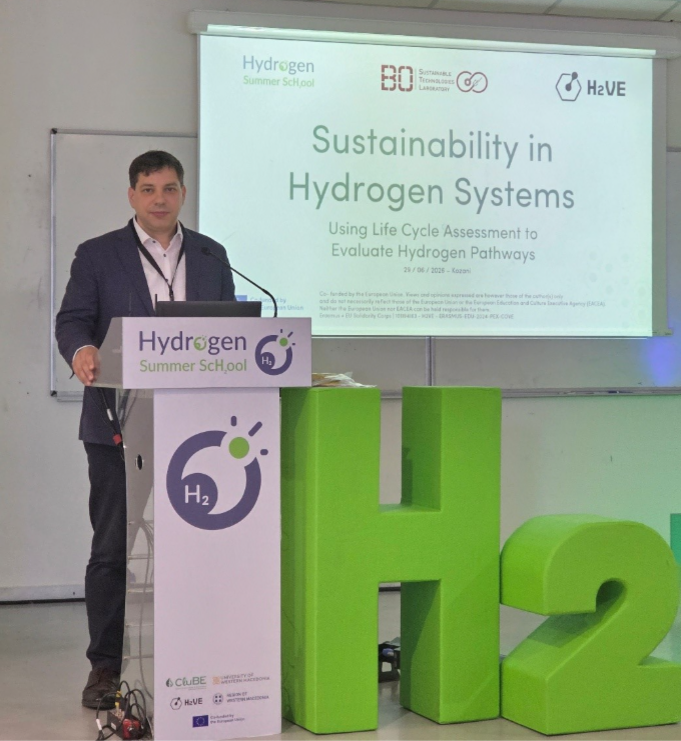
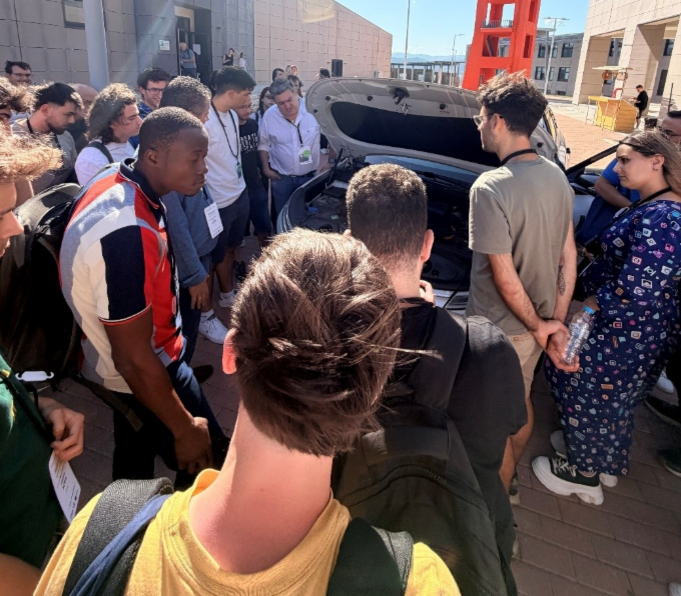
Additionally to further presentations and demonstrations of a hydrogen-powered bicycle (BHyKE) and a hydrogen-powered car (Hyundai NEXO, figure 1), which rounded out the first day, there was also a presentation by the Laboratory for Sustainability in Engineering on the topic of “Sustainability in Hydrogen Systems” (figure 2). In a combination of lecture and interactive group work, Prof. Dr.-Ing. Semih Severengiz and Loredana Tiedke first introduced the summer school participants to the concept of sustainability and the fundamentals of life cycle assessment (LCA) as a method for quantitatively measuring sustainability, before drawing a connection to the LCA of hydrogen systems using the GH2GH research project as an example. During the interactive group work, students were able to use real, simplified data from the GH2GH research project’s use case to conduct their own LCA-style analysis of how different parameters affect the emissions of a hydrogen system over its entire lifecycle.
The following days delved deeper into topics spanning the entire hydrogen value chain: from industrial applications and fuel cell technologies to direct exchanges with industry and association representatives, as well as Power-to-X pathways, solar resources for hydrogen production, and the integration of Hydrogen Valleys with vocational education and training (VET).
In addition to the Summer School’s program, the second in-person General Assembly of the H2VE consortium took place on Wednesday afternoon. This is an important opportunity for project partners to exchange views on progress in person and to plan and discuss the project’s next steps.
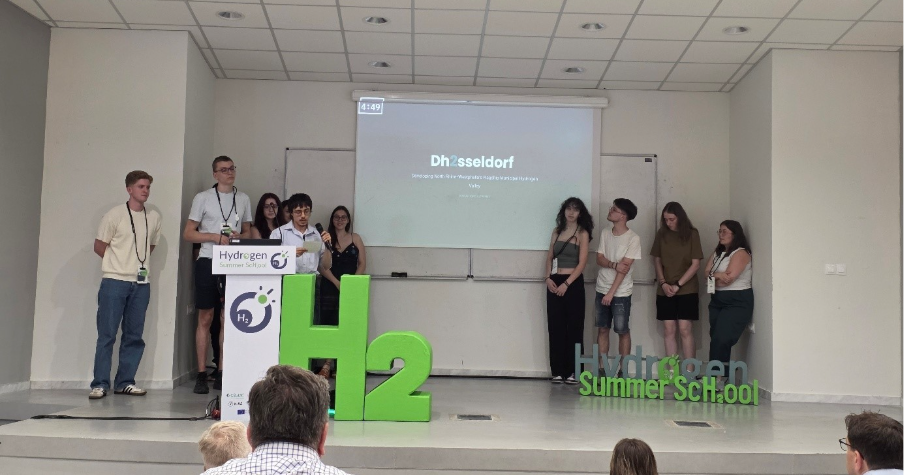
For Prof. Severengiz and Loredana Tiedke, the event under the motto “Exploring the Setup of a Local Hydrogen Valley: Let’s Support Us!” marked the conclusion of the Summer School. Over the course of the week, participants got to know the six regions involved in the H2VE project, each of which is establishing a CoVE (Center of Vocational Excellence); for the event, they were able to assign themselves to one of these regions. In mixed-gender groups, each group was paired with at least one expert from their respective region and, as a thought experiment, developed their own “Hydrogen Valley”: They identified the region’s main focus—such as industry or mobility—calculated the annual hydrogen demand as well as the amount of renewable energy required to produce green hydrogen, and finally estimated the resulting levelized cost of hydrogen for each region. The results were presented to all participants in short presentations.
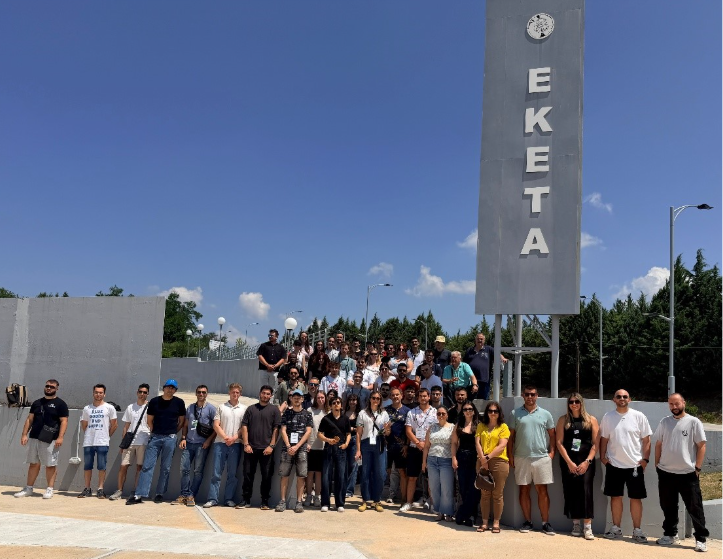
For the remaining participants, Friday included an on-site visit to the Centre for Research & Technology Hellas (CERTH) in Ptolemaida, offering insights into the H2-HUB there, the EVELIXIA project, and the “Energy Pack” from Blue Energy Revolution, a project partner of the H2VE consortium.
The Summer School thus offered not only technical input but, above all, a forum for international exchange among research, industry, and educational institutions. For the H2VE project, the week in Kozani was a key milestone in linking insights from curriculum and CoVE development with current industrial and scientific perspectives, and a good example of how European Hydrogen Valley initiatives can learn from one another.