

Making Sustainability 2026: The Sustainable Technologies Laboratory at the International Conference on Craft, Design and Innovation

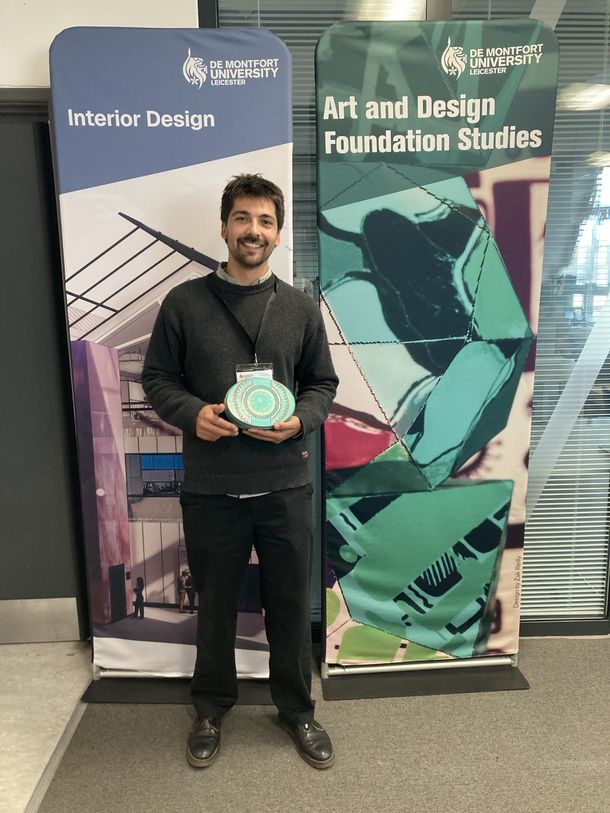
How can products be designed so that they can be used for longer, repaired more easily, and returned to circular systems as effectively as possible? And how can we measure which end-of-life strategies actually provide an environmental benefit? With contributions addressing these and other questions, the Sustainable Technologies Laboratory at Bochum University of Applied Sciences was represented at the international conference Making Sustainability 2026, held at De Montfort University in Leicester on September 7 and 8, 2026.
The conference brought together researchers and other stakeholders from academia, product design, and higher education institutions. The focus was on sustainable design, emerging technologies, materials, repair, and the circular economy. A recurring central challenge was how good, in some cases still theoretical, ideas can be transformed into concrete solutions for more sustainable products and systems.
With a total of four conference contributions from the projects KREISRAD and CIRCLE, the Sustainable Technologies Laboratory was particularly well represented. Lisa Trautmann used the example of e-cargo bikes to demonstrate how life cycle assessment results can help guide the targeted development of products for the circular economy. Daniel Tellez Nitzling examined the potential positive impact of repair-oriented design strategies and battery replaceability on the environmental performance of in-ear headphones. In a conceptual study, Santiago Eduardo explored how regulatory requirements can be translated into specific product characteristics and represented in an extensible data model. The aim is to support Circular Product Design in alignment with regulatory requirements. Finally, Erik Alexander Recklies presented a systematic literature review of comparative life cycle assessments that evaluate the environmental impacts of different R-strategies.
Although the four contributions differ in methodology and thematic focus, they share a common perspective: sustainability begins at the product design stage. Whether e-cargo bikes, in-ear headphones, or other technical products, decisions regarding materials, construction, repairability, and use have a decisive influence on their subsequent environmental impact. Particular recognition should be given to Daniel Tellez Nitzling’s contribution, entitled “Environmental Impact of Repair-Oriented Design Strategies for In-Ear Headphones”. Tellez Nitzling received two awards for his outstanding contribution: “Sustainable Champion” and “Most Engaging Presenter.” We warmly congratulate him on this remarkable achievement.
In addition to presenting their own research, the conference placed particular emphasis on international and interdisciplinary exchange. Discussions with researchers from a wide range of disciplines once again demonstrated how important it is to bring together technical, design, and societal perspectives in order to develop forward-looking sustainable solutions.


