

SETAC Europe 27th LCA Symposium:
Contributions of the Sustainable Technologies Laboratory
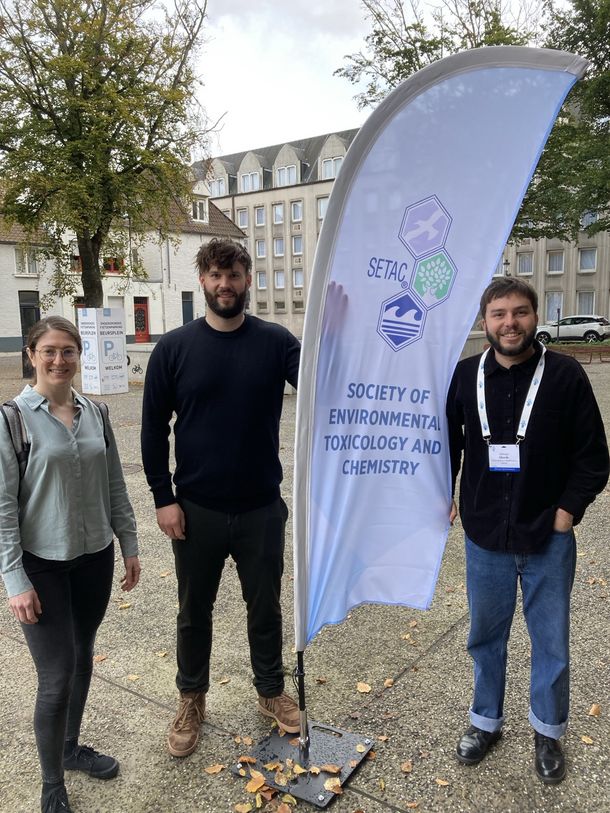
The Sustainable Technologies Laboratory was represented by three poster presentations at the 27th SETAC Europe LCA Symposium. Held from October 19 to 21, 2026, in Bruges, Belgium, the symposium brought together experts from academia, industry, and policymaking. Under the theme “Designing Tomorrow: Advancing Life Cycle Approaches for European Sustainability Initiatives,” the event focused on how Life Cycle Assessments and related methods can support the transition toward a more sustainable economy and enable informed decision-making in policy and industry.
Key topics included methodological advances in Life Cycle Assessment, digitalization and the application of artificial intelligence, as well as the integration of life cycle approaches into European sustainability strategies and regulatory initiatives. Other central themes included the circular economy, resource efficiency, critical raw materials, and the assessment of biodiversity impacts. Social and economic dimensions of sustainability assessment, including Social Life Cycle Assessment and Life Cycle Costing, were also discussed, alongside their applications across value chains. The symposium provided a platform for exchange between academia, industry, public authorities, and other stakeholders on methodological innovations and their practical application to accelerate sustainable transformation processes.
Santiago Eduardo, Lisa Trautmann, and Dr. Erik Alexander Recklies represented the Sustainable Technologies Laboratory at the symposium. In addition to engaging in professional exchange, building networks, and strengthening existing collaborations, they presented their latest research findings during the poster sessions.
Santiago Eduardo presented the poster “Circular Product Design: Mapping Regulations and Product Characteristics to Life Cycle Impacts.” The study investigates how EU regulations and product characteristics can be systematically linked to life cycle phases and circularity metrics. The aim is to connect regulatory requirements with life cycle-based assessment methods. The findings provide a foundation for a digital decision-support system that integrates sustainability and circularity considerations into product development. This conceptual work was developed as part of the CIRCLE project.
Lisa Trautmann presented the poster “Enhancing End-of-Life Decisions for E-Cargo Bikes through LCA and Field Failure Data Integration.” The research explored how end-of-life decisions for electric cargo bikes can be improved by combining Life Cycle Assessment results with data on the failure probabilities of individual components. The research was conducted as part of the KREISRAD project.
Finally, Dr. Erik Alexander Recklies presented the poster “Evaluating Circularity: An LCA-based indicator to measure the environmental effectiveness of R-strategies.” The poster introduced an innovative LCA-based indicator for evaluating the effectiveness of end-of-life scenarios. The indicator considers both their environmental effectiveness and the hierarchy of the R-strategies applied. These methodological considerations were developed as part of the CIRCLE project.


