

Kreisrad Project visits M&R Recycling Solutions in Bergkamen
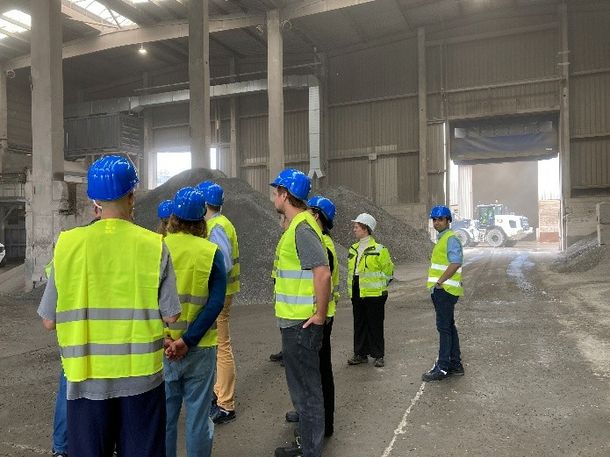
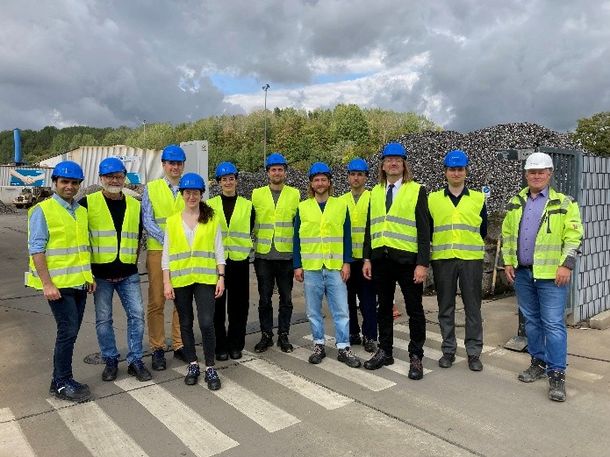
Last week, the second meeting of the Kreisrad research project with the project advisory board took place at M&R Recycling Solutions in Bergkamen. As a member of the project advisory board, M&R had invited the project partners muli cycles, elorec, the Chair of Reliability Engineering and Risk Analysis (LZR) at the University of Wuppertal, and the Sustainable Technologies Laboratory (STL) at Bochum University of Applied Sciences. Also attending were the project advisory board members Dinges GmbH and DHM Prüfsysteme. The project is funded by the Deutsche Bundesstiftung Umwelt (DBU) (project page).
What is Kreisrad about?
The Kreisrad research project investigates how the circularity of Light Electric Vehicles (LEVs) can be improved, using e-cargo bikes as an example. The project focuses on various end-of-life strategies, such as reuse, repair, and recycling, as well as measures to extend the service life of components. The aim is to assess ecological, economic, and social aspects and use the findings to support informed decisions for circular product design. The knowledge gained will contribute to the development of a circular-economy-optimized e-cargo bike prototype and a practical guide for manufacturers. A digital product passport, which brings together relevant information about a product throughout its life cycle, is also part of the project.
Insights into Practice
At the beginning of the meeting, participants took part in a tour of M&R's facilities, gaining exciting insights into practical processes and challenges in recycling. The visit generated considerable interest, and we would like to sincerely thank M&R Recycling for hosting the meeting and providing this informative tour.
The tour was followed by presentations on current activities and interim results of the project. elorec presented the data collected during the dismantling process on various possible end-of-life strategies for the components of the e-cargo bike. These results provide a basis for the sustainability assessment, which was conducted and presented by the STL and also incorporates the findings of the LZR. The LZR reported on its analysis of the collected data to estimate component failure probabilities and potential service lifetimes.
The various findings will be brought together as the project progresses and used to develop an e-cargo bike prototype specifically optimized according to circular economy criteria.
Practical Expertise Provides New Perspectives
The exchange with the project advisory board provided important input for the project. Discussions included potential standardization in repair processes as well as current barriers to repair and reuse. The perspectives from industry and practice help to align technical questions with the actual requirements and framework conditions of the sector.
The Kreisrad research project will run until March 2027. In addition to the circular-economy-optimized e-cargo bike prototype, a practical guide will be developed by the end of the project. This guide is intended to make the findings accessible to other manufacturers and stakeholders in the sector and to provide concrete approaches for strengthening the implementation of circular economy principles in the field of e-cargo bikes.


