

Chronic Back Pain: Many Treatments Help – But Only in the Short Term
International Study Highlights the Limitations of Conservative Treatments.
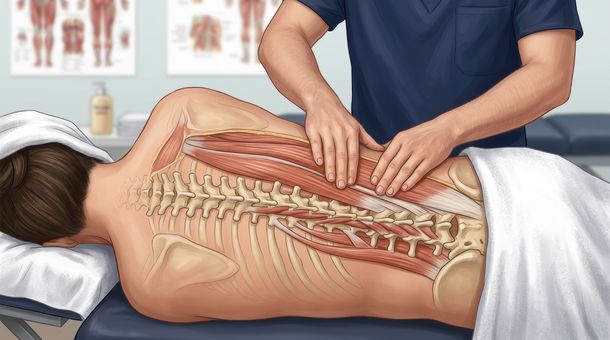
A large-scale analysis by an international research team, led by the Bochum University of Applied Sciences, shows that non-surgical treatments such as massage, exercise therapy, or acupuncture for chronic back pain can alleviate symptoms – but usually only for a few weeks. Clinically significant improvements do not persist in the long term.
The study was conducted under the direction of Prof. Dr. Daniel Belavy (Bochum University of Applied Sciences) in collaboration with partners from Australia (Deakin University, La Trobe University, Adelaide University, Monash University, University of Melbourne), the United Kingdom (University of Bristol), China (Xi’an University of Architecture & Technology, Xuanwu Hospital Capital Medical University), and other countries, and was published on 30. June 2026 in the journal BMJ Medicine.
Short-term effects – but no lasting impact
The researchers analyzed data from 551 randomized studies involving over 71,000 patients. Numerous conservative therapies were examined, including exercise therapy, manual therapy, acupuncture, psychological approaches, and drug treatments.
The key finding: Many of these treatments lead to a noticeable improvement in pain and function – though primarily in the short term, over a period of about 10 to 12 weeks. “We see that various forms of therapy are indeed effective – but this effect generally does not last long,” explains study leader Prof. Dr. Daniel Belavy, Professor of Physical Therapy at Bochum University of Applied Sciences. After about a year, no clinically relevant benefits were observed, even though individual effects were still statistically detectable.
Active or passive? The difference is smaller than expected
Another important finding: active therapies, such as exercise therapy, and passive treatments, such as manual therapy or massage, have similar effects. This contradicts some widely held assumptions in clinical practice. “We need to move away from the idea that a single treatment solves the problem,” says Belavy. “Instead, we need strategies that empower people to manage their pain themselves in the long term.”
“Back pain usually has not just one cause, but several,” the back pain expert notes. This must be taken into account more strongly in treatment, according to Prof. Belavy. “We know, from other research, that only about one third of the treatment benefit comes from the actual treatment itself. Instead, we need approaches that help patients with persistent back pain help themselves better – for example, through health coaching.”
Such strategies include self-management, lifestyle and behavioral changes, and continuous support rather than short-term therapy cycles. “The German healthcare system does not yet sufficiently support such approaches,” says Belavy. “Initial results are promising, but more research is needed.”
Challenges of the existing studies
Another finding of the analysis: There is a lot of variability in how the treatments were done in each of the randomized studies included in the analysis. “But, this reflects also reality of clinical care, how treatments may be done in different ways, and subsequently what people with back pain gain from those treatments,” commented Prof. Belavy. Future studies should therefore focus more on long-term effectiveness, self-management, patient involvement, and lifestyle changes, according to the researchers.
Citation: https://bmjmedicine.bmj.com/content/5/1/e001908


