

- Applied Electronics
- Applied Computer Science
- Automation Engineering
- Autonomous Systems
- Business Informatics
- Controls and Automotive Systems
- Construction and CAE
- Electronics and Signal Processing
- Embedded Systems
- Mechanics and Vehicle Dynamics
- Radio & Network Engineering
- Physics and Materials
- Software Engineering
Software Engineering
Welcome to the Software Engineering Research Group. The group is part of the Department of Electrical Engineering and Computer Science and is located on the Velbert/Heiligenhaus campus.
Are you interested in thesis projects or Cooperative Engineering Course KIS projects or development projects?
We supervise bachelor´s and master´s theses as well as Cooperative Engineering Course KIS projects and development projects by arrangement. If you have any topic suggestions related to software engineering or IT in general, please feel free to contact us.
Focus Areas in Software Engineering
The design of complex systems that consist largely of software (so-called software-intensive systems) is widely regarded today as one of the major challenges facing engineers and computer scientists. In software development, therefore, the effort required for activities other than pure programming typically exceeds the effort required for programming itself many times over. In particular, the success of a development project depends on specifying the right requirements correctly and subsequently implementing them accurately to efficiently produce high-quality products. The Chair of Software Engineering therefore focuses specifically on these early development phases.
With the emergence of new end devices in human-computer interaction, such as smartphones, new opportunities are arising in user interface development with regard to the user experience (UX). These must be taken into account early in the development process within the framework of usability engineering. Domain-driven design (DDD) is a well-suited approach for developing good solutions based on domain expertise.
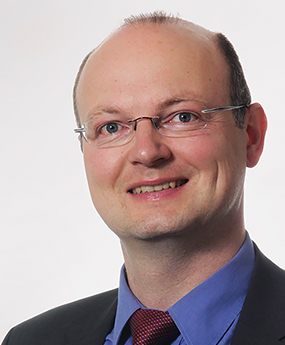
Workgroup Leader
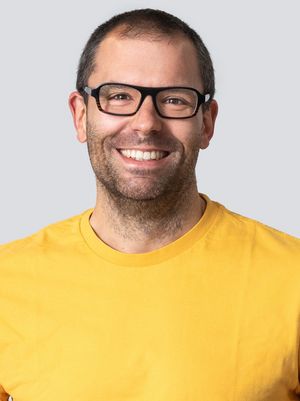
Research Associate
- Schuermann V., Weidauer C., An Engineering Approach for Developing Sustainable Ambient Assisted Living Solutions, Proceedings of the 4th IEEE Conference on Technologies for Sustainability (SusTech) 2016, Phoenix, AZ, USA; October 9th-11th, 2016, pp. 200-206, IEEE,Online-Version: ieeexplore.ieee.org/document/7897167, ISBN (elctronic) 978-1-5090-4158-9, ISBN (PoD) 978-1-5090-4159-6
- Schuermann V., Weidauer C., The Internet of Things: Opportunities for Greater Sustainability in the Engineering of Nursing and Healthcare Applications, in: Callaos N., Hashimoto S., Perlovsky L., Sánchez B., Tzeng J.-R. (eds.), Proceedings of The 19th World Multi-Conference on Systemics, Cybernetics and Informatics: WMSCI 2015, Orlando, USA; July 12th-15th, 2015, pp. 166-170, ISBN 978-1-941763-25-4
- Feldmüller D., Weidauer C., Projektorientiertes Lernen im Ingenieurstudium, in: GPM Deutsche Gesellschaft für Projekmanagement e. V. (Hrsg.), projektManagement aktuell, Heft 1, 26. Jahrgang 2015, TÜV Media GmbH, TÜV Rheinland Group, 2015, S. 60-64, ISSN 0942-1017
- Feldmüller D., Weidauer C., Kompetenzentwicklung durch studienintegrierte Praxisprojekte, in: Hochschullehrer–Bundesvereinigung e. V. hlb (Hrsg.), Die Neue Hochschule (DNH) für anwendungsbezogene Wissenschaft und Kunst, Heft 5, Jahrgang 2014, Bonn 2014, S. 150-152, ISSN 0340-448 x, Online-Version: hlb.de/fileadmin/hlb-global/downloads/dnh/full/2014/DNH_2014-5.pdf
- Schürmann V., Weidauer C., UPnP-Serviceplattform für Ambient Assisted Living Dienste, in: Koch M., Butz A. & Schlichter J. (Hrsg.), Mensch und Computer 2014 Tagungsband, Oldenbourg Wissenschaftsverlag, München 2014, S. 387-390, ISBN-13 978-3-11-034448-6
- Weidauer C., Exemplarische Lernraumgestaltung für den Handlungskompetenzerwerb durch Software Engineering, in: SQ-Forum, Schlüsselqualifikationen in Lehre, Forschung und Praxis, 01/2013, S. 5-30, ISSN 1612-7463
- Schuermann V., Weidauer C., Usage of Building Automation Infrastructure for Health-Care and Ambient Assisted Living Applications, in: Callaos N., Lesso W., Siddique M., Sánchez B., Tremante A. (eds.), Proceedings of The 2nd International Conference on Information and Communication Technologies and Applications: ICTA 2012, Orlando, USA; November 13th-16th, 2012, pp. 207-212, ISBN-13 978-1-936338-77-1
- Weidauer C., Multimediale Lehr- und Lernsysteme – Effiziente Aufgaben- und Animationserstellung, Spektrum Akademischer Verlag Heidelberg, Berlin 2002 (Forschung in der Softwaretechnik), ISBN 3-8274-1321-4
- Weidauer C., Animations-Framework in Java – Systematische Animationsentwicklung mit Mehrschichtenarchitektur, in: Informatik Forschung und Entwicklung, Band 15 Heft 2, Springer-Verlag Berlin, Heidelberg 2000, S. 83-91, ISSN 0178-3564 (gedruckte Version), 0949-2925 (elektronische Version)
- Weidauer C., Generatorunterstützte objektorientierte Entwicklung multimedialer Lehr- und Lernsysteme zur Effizienzsteigerung und Qualitätsverbesserung, in: Mehlhorn K., Snelting G. (Hrsg.), Informatik 2000, Neue Horizonte im neuen Jahrhundert, 30. Jahrestagung der Gesellschaft für Informatik, Berlin, 19.-22. September 2000, Springer Verlag Berlin, Heidelberg 2000, S. 440-460, ISBN 3-540-67880-8
- Weidauer C., Ein Vorgehensmodell für die industrielle Entwicklung multimedialer Lehr- und Lernsysteme, in: Balzert H., Behle A., Kelter U., Nagl M., Pauen P., Schäfer W., Six H.-W., Voss J., Wadsack J., Weidauer C., Westfechtel B., Studie über softwaretechnische Anforderungen an multimediale Lehr- und Lernsysteme der Forschergruppe SofTec NRW, September 1999, S. 112-143
- Weidauer C., Generierung multimedialer Aufgaben mit ExerGen, in: Euler B., Kreutz R., Spitzer K. (Hrsg.) Multimedia in der Medizin, Proceedings zum Workshop in Aachen 27.-28. Oktober 1999, Wissenschaftsverlag Mainz, Aachen 1999, S. 135-147, ISBN 3-89653-571-4
- Balzert H., Weidauer C., Multimedia-Systeme – ein neues Anwendungsgebiet für die Software-Technik, in: Softwaretechnik-Trends, Band 18 Heft 4, Gesellschaft für Informatik, November 1998, S. 4-9, ISSN 0720-8928
Across all courses, Prof. Dr.-Ing. Christian Weidauer places particular emphasis on fostering students’ practical skills beyond the transmission of technical and methodological knowledge and abilities. Structured thinking and action in line with engineering principles are essential for software engineering, computer science, and mechatronics, and provide a solid foundation for professional success!
Courses at the Velbert/Heiligenhaus Campus
The members of the Software Engineering Working Group teach the following courses at the Velbert/Heiligenhaus campus in the bachelor’s and master’s degree programs at Bochum University of Applied Sciences.
- Lectures, exercises, labs, projects, seminars
- Object-Oriented Programming (BA)
- Requirements and Software Engineering (BA)
- Application Design and Development (BA)
- Distributed Applications (BA)
- Software Development Project (BA)
- Software Practice and Advanced IT Project (BA)
- Usability Engineering and Application Development (MA)
- Development Project & Seminar (MA).
For Cooperative Engineering Course KIS students, supervision is also provided for KIS Projects 1, 2, and 3.
All information about upcoming events will be posted on the moodle platform.
moodle HS Bochum
Workgroup Leader


