

Study Geothermal Energy Systems: Heat from Below
19.11.2025 Magazin
New English-language master's degree programme focuses on energy generation from geothermal sources.
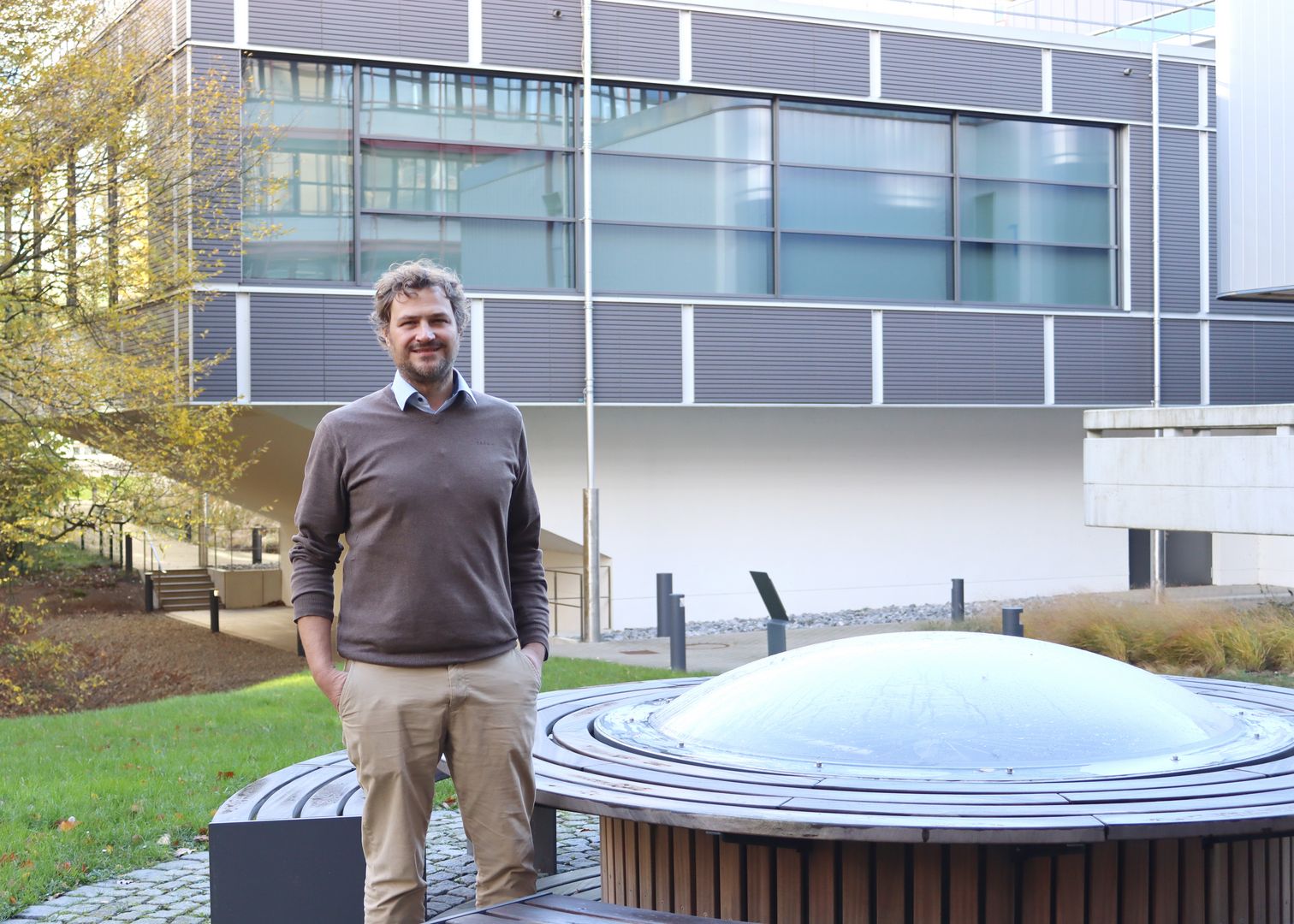
They work underground: geothermal technologies use the earth's naturally occurring heat at various depths for heating, cooling, or generating electricity. But what exactly happens underground? How can energy be extracted from geothermal sources? How can groundwater flows be simulated for the efficient site selection of a geothermal plant, and in which countries is geothermal energy used today and in what form? Students will learn this in three semesters in the new English-language master's degree programme ‘Geothermal Energy Systems’, which will start at Bochum University of Applied Sciences in the summer semester of 2026.
Dr. Bastian Welsch, Professor of geothermal energy and future program director, provides insights into the program.
What potential does geothermal energy have for sustainable energy production?
Prof. Dr. Bastian Welsch: The deeper we go into the earth, the hotter it gets. This is exactly what geothermal energy makes use of. Near-surface geothermal energy uses the heat up to 400 meters below the earth's surface to heat or cool single-family homes or apartment buildings, for example, using heat pumps. Deep geothermal energy, on the other hand, uses the hot groundwater that occurs naturally deeper in the earth to generate electricity using geothermal power plants or to provide district heating for entire city districts, for example. We now assume that the Earth's inner core is approximately 6.000 °C hot. The further we move away from this core towards the Earth's surface, the more the temperature decreases, with around 99% of the Earth's mass still hotter than 1.000 °C and only 0.1% of the Earth's mass having temperatures below 100 °C. The total heat content of the Earth would provide us with so much energy that it could cover humanity's annual energy needs for an estimated 20 billion years. But geothermal energy is not only virtually inexhaustible. It is also a renewable energy source that, unlike solar and wind energy, is available regardless of weather conditions. In this respect, geothermal energy is an exciting energy source that offers enormous potential and will play a central role in sustainable energy supply in the future.
What kinds of questions related to geothermal energy do students deal with in the new master's degree programme?
Prof. Dr. Bastian Welsch: The degree programme focuses on the scientific, technical, and economic fundamentals of geothermal energy use - from development and energy conversion to system integration. Among other things, students acquire skills in analyzing the geological conditions of the subsurface: What are the physical properties of the respective rock type? What is their thermal conductivity or heat capacity? What can be said about the density of the rock and its porosity? How much energy could be extracted from which depth, depending on the respective subsurface conditions? These are questions that determine the location of a geothermal plant. In addition, students deal with drilling methods for geothermal energy extraction and heat transport processes in the subsurface. In the module ‘Groundwater Hydraulics’, they analyze, among other things, the flow of groundwater depending on the type of rock. They learn to describe the hydrogeological situation at a site mathematically and to simulate water flows in order to evaluate and question them with regard to the efficient selection of a site for a geothermal plant. Students deal with the design of geothermal plants, sustainable resource management, and energy policy. In the module ‘Large Scale Thermal Energy Storage Systems’, they also address the question of how heat can be stored seasonally, examining large heat storage systems. Students learn to develop sustainable solutions to storage challenges, taking into account the economic efficiency, reliability, and environmental impact of storage systems. Another exciting module is ‘Applied Geophysics’.
What do students learn there?
Prof. Dr. Bastian Welsch: There, students learn about geophysical measurement methods for developing a picture of underground conditions. One of these methods, for example, can generate acoustic waves underground. At the surface, we use special sensors to measure how fast the vibrations propagate and when all the vibrations have reached the surface. These measurements give us a two-dimensional view of the subsurface, allowing us to draw conclusions about the layers present underground. Students learn about the areas of application of various measurement methods, but also deal extensively with the evaluation and classification of measurement data. In addition, we look at geothermal energy on a global scale and examine how it is used in different countries around the world. In countries such as Iceland, New Zealand, and Kenya, where there are many volcanic regions, geothermal energy is largely used to generate electricity. In Germany, the focus is on heat generation.
How practical is the program?
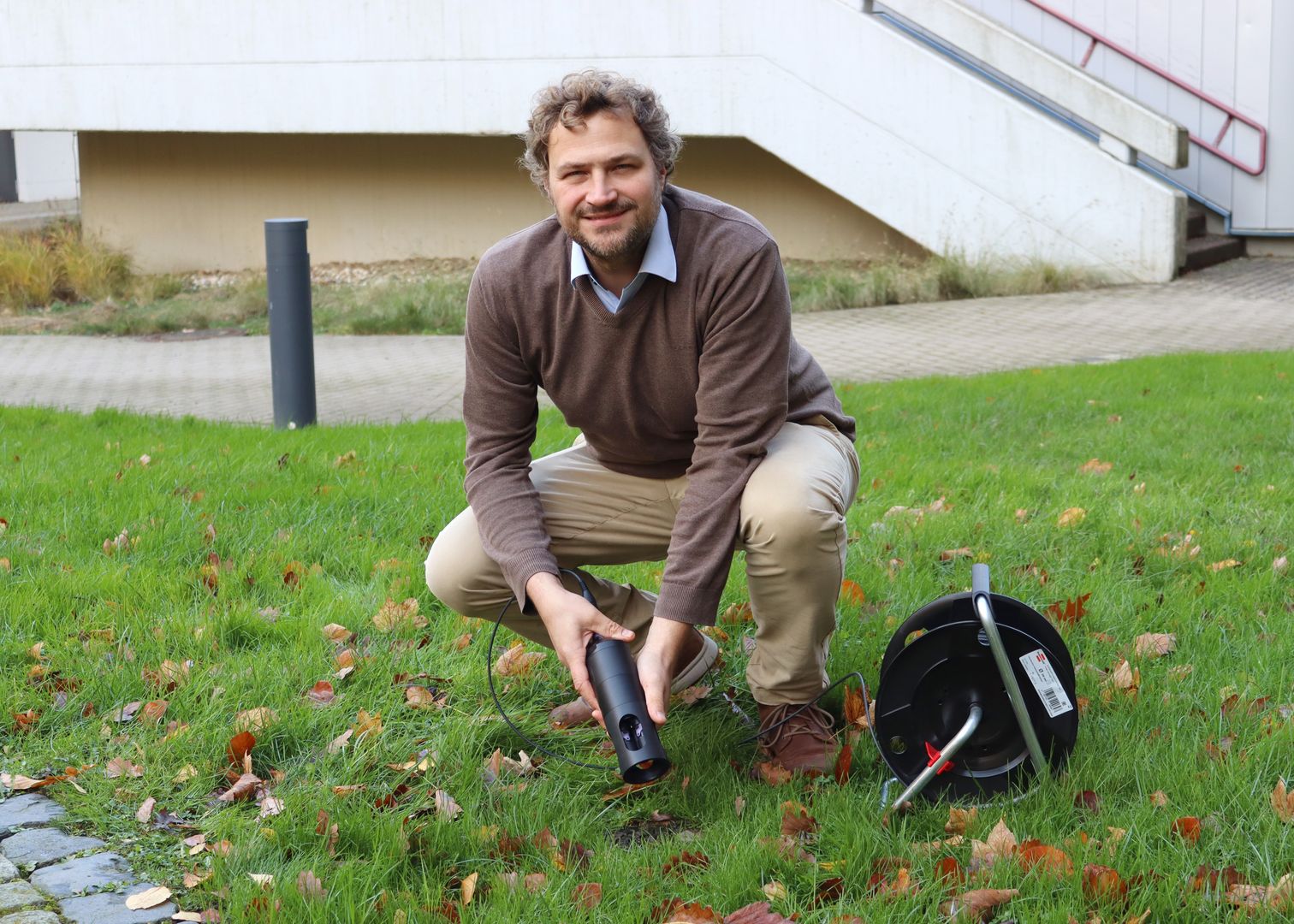
Prof. Dr. Bastian Welsch: The program is very practical and research-oriented. Students apply the theoretical knowledge they have learned directly in the university laboratories and in the field. In the laboratories, for example, they examine various rocks under a microscope to determine their properties. However, students also carry out field measurements to explore the subsurface. Using a depth probe, for example, they learn how to take temperature measurements in boreholes. Through research collaborations, particularly with the neighboring Fraunhofer Research Institution for Energy Infrastructures and Geotechnologies IEG, students acquire application-oriented skills that are directly tailored to the requirements of the global energy market. Working in groups, students will collaborate on interdisciplinary planning or research projects with a strong focus on energy and practical relevance, and develop scientific solutions to issues arising from the respective project. The projects focus on current developments that are shaping the industry, such as climate-neutral heat supply for neighborhoods, i.e., municipal heat planning. However, the projects also involve students applying project management methods, learning to organize themselves in an interdisciplinary team, and documenting and presenting project results.
What should prospective students bring with them?
Prof. Dr. Bastian Welsch: The program is particularly aimed at prospective students who have already obtained a first academic degree, for example a bachelor's degree with a background in engineering or geosciences and a focus on energy technology. With the exception of two supplementary mathematics lectures, the master's degree programme is taught entirely in English, so sufficient English language skills must be demonstrated in order to be successfully admitted. This means that the degree programme appeals not only to international applicants, but also to those in Germany who may be planning to work abroad later and are interested in pursuing a master's degree in English. The master's program is ideal for prospective students who have an affinity for natural sciences, are curious about technical issues and scientific work, and aspire to an international career in the geothermal sector.
What are the future prospects for alumni? In which areas can they work after completing their master's degree?
Prof. Dr. Bastian Welsch: Jobs for alumnuses can be found in national and international energy companies, in public administration, for example at approving authorities for geothermal plants, or in engineering firms that offer various services, from planning and feasibility studies to specialized drilling work and the construction of geothermal plants. In addition, the degree programme also prepares students for careers in research institutes. In addition to my work at the university, I am a member of the advisory board of the German Geothermal Association, which includes members from academia as well as industry, planning, and the energy supply sector. All of them report that the demand for well-trained experts in the field of geothermal energy is growing. Both in research and in application, experts are sought who see their professional future in promoting the use of geothermal sources for energy production.
The interview was conducted by Daniela Schaefer, online editor.
Study Geothermal Energy Systems
Study details


