

BACKCamPAIN – PhD project to raise awareness of back pain
Background to the “BACKCamPAIN” PhD project
Back pain is a widespread [1] and costly [2] health problem worldwide. It is regarded as a typical example illustrating the so-called biopsychosocial model [3], which describes how biological, psychological and social factors interact and influence health [4]. Consequently, the management of back pain – in diagnosis, treatment and everyday life – should take all three levels into account. The German guideline on non-specific low back pain [5] therefore recommends a conservative approach for low back pain where an underlying biological pathology has been ruled out: the focus should be on active measures, education and the promotion and teaching of self-management strategies [5].
Despite extensive research in this field, many people still hold on to negative attitudes and beliefs about back pain [6-16]. These views are often based on outdated biomechanical explanations and contradict current scientific evidence. Such negative views can reduce confidence in one’s own body – also known as self-efficacy – and thus have a negative impact on the subsequent course of back pain [17]. A further problem is that – alongside factors such as the personal social environment – healthcare professionals are themselves not entirely free from such beliefs [5, 11, 18]. This can lead to the application of non-evidence-based and often non-recommended treatments, whilst educational measures tend to be met with greater resistance [17, 19].
In line with the biopsychosocial model, changing these negative attitudes and beliefs can contribute to improved outcomes, such as reduced pain intensity [20, 21]. International examples show that targeted information campaigns – e.g. media campaigns – can be helpful in reducing misconceptions relating to back pain [22].
No comparable programm currently exists in Germany. It is as yet unclear which attitudes and beliefs prevail amongst the German population and where people obtain their information from.
Objectives of this PhD project
The overarching aim of BACKCamPAIN is to help make scientifically-based knowledge about back pain understandable and easily accessible – to ensure a better-informed public and improved care.
The project is divided into three consecutive studies:
Study 1: Exploratory online survey using a mixed-methods approach
A survey to identify the attitudes and beliefs currently prevalent amongst the German population regarding back pain, as well as the sources of the underlying information, via an online questionnaire. This survey was completed at the end of 2025 and is currently being analysed.
Study 2: Development of a targeted information session as part of a qualitative focus group study
Based on the results of the online survey from Study 1, an information programm will be developed in collaboration with representatives of the target group through two focus groups. These are planned for 2026. Further information on participation will be published as soon as recruitment begins (expected in August 2026).
Study 3: Piloting the developed intervention
The feasibility and effectiveness of the developed awareness-raising session will be tested in a pilot study.
Contact

Project Team
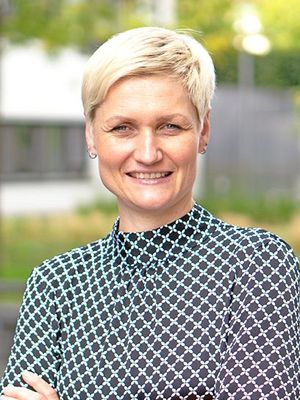
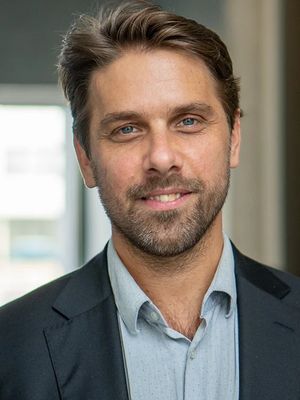
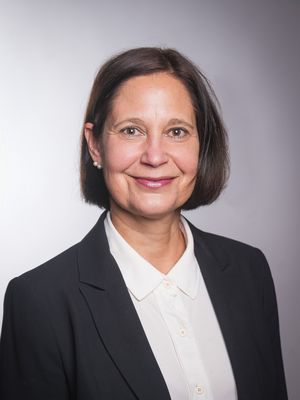

External Project Partner
- Prof. Dr. Cormac Ryan (Teesside University, Middlesbrough, Great Britain)
[1] Ferreira, M. L. et al. Global, regional, and national burden of low back pain, 1990–2020, its attributable risk factors, and projections to 2050: a systematic analysis of the Global Burden of Disease Study 2021. The Lancet Rheumatology5, e316–e329 (2023).
[2] Ossendorf, A. Krankheitskostenanalyse bei Patienten mit chronischen Rückenschmerzen. ZBW – Leibniz Information Centre for Economics, Kiel, Hamburg.
[3] Knezevic, N. N., Candido, K. D., Vlaeyen, J. W. S., Van Zundert, J. & Cohen, S. P. Low back pain. The Lancet398, 78–92 (2021).
[4] Engel, G. L. The need for a new medical model: a challenge for biomedicine. Science196, 129–136 (1977).
[5] Arzneimittelkommission Der Deutschen Ärzteschaft (AkdÄ) et al.Nationale VersorgungsLeitlinie Nicht-spezifischer Kreuzschmerz – Langfassung, 2. Auflage. (Bundesärztekammer (BÄK); Kassenärztliche Bundesvereinigung (KBV); Arbeitsgemeinschaft der Wissenschaftlichen Medizinischen Fachgesellschaften (AWMF), 2017). doi:10.6101/AZQ/000353.
[6] Leysen, M. et al. Attitudes and beliefs on low back pain in physical therapy education: A cross-sectional study. Brazilian Journal of Physical Therapy25, 319–328 (2021).
[7] Wirth, B. & Schweinhardt, P. Personalized assessment and management of non-specific low back pain. European Journal of Pain28, 181–198 (2024).
[8] Kiel, S., Raus, C., Sierocinski, E., Knauthe, P. & Chenot, J.-F. Concordance of patient beliefs and expectations regarding the management of low back pain with guideline recommendations – a cross-sectional study in Germany. BMC Fam Pract21, 275 (2020).
[9] Taylor, S. & Bishop, A. Patient and public beliefs about the role of imaging in the management of non-specific low back pain: a scoping review. Physiotherapy107, 224–233 (2020).
[10] Diniz, L. M. et al. Beliefs regarding the use of imaging among patients with low back pain: A cross-sectional study in the context of a middle-income country. PM&R17, 178–186 (2025).
[11] Sharma, S. et al. Clinician and patient beliefs about diagnostic imaging for low back pain: a systematic qualitative evidence synthesis. BMJ Open10, e037820 (2020).
[12] Jenkins, H. j., Hancock, M. j., Maher, C. g., French, S. d. & Magnussen, J. s. Understanding patient beliefs regarding the use of imaging in the management of low back pain. European Journal of Pain20, 573–580 (2016).
[13] Natoli, A. R., Jones, M. D., Walker, E. D. & Gibbs, M. T. “I could 100% see myself getting hurt if I did it wrong”: a qualitative exploration of exercise perceptions in people with chronic low back pain. Disability and Rehabilitation47, 2760–2769 (2025).
[14] Krug, R. C. et al. An investigation of implicit bias about bending and lifting. Scandinavian Journal of Pain22, 336–347 (2022).
[15] Kiel, S., Raus, C., Sierocinski, E., Knauthe, P. & Chenot, J.-F. Concordance of patient beliefs and expectations regarding the management of low back pain with guideline recommendations – a cross-sectional study in Germany. BMC Family Practice21, 275 (2020).
[16] Darlow, B. et al. Easy to Harm, Hard to Heal: Patient Views About the Back. Spine40, 842 (2015).
[17] Main, C. J., Foster, N. & Buchbinder, R. How important are back pain beliefs and expectations for satisfactory recovery from back pain? Best Practice & Research Clinical Rheumatology24, 205–217 (2010).
[18] Bahns, C., Happe, L., Thiel, C. & Kopkow, C. Physical therapy for patients with low back pain in Germany: a survey of current practice. BMC Musculoskeletal Disorders22, 563 (2021).
[19] Gardner, T. et al. Physiotherapists’ beliefs and attitudes influence clinical practice in chronic low back pain: a systematic review of quantitative and qualitative studies. Journal of Physiotherapy63, 132–143 (2017).
[20] Walsh, D. A. & Radcliffe, J. C. Pain beliefs and perceived physical disability of patients with chronic low back pain. Pain97, 23–31 (2002).
[21] Martinez-Calderon, J., Struyf, F., Meeus, M. & Luque-Suarez, A. The association between pain beliefs and pain intensity and/or disability in people with shoulder pain: A systematic review. Musculoskeletal Science and Practice37, 29–57 (2018).
[22] Suman, A. et al. A systematic review of the effectiveness of mass media campaigns for the management of low back pain. Disability and Rehabilitation43, 3523–3551 (2021).
Details
| Project Duration: | approx. until 2028 |
|---|---|
| Principle Investigator: | Prof Daniel Belavy (Bochum University of Applied Sciences, Division of Physiotherapy) Prof. Dr. Katja Ehrenbrusthoff (Bochum University of Applied Sciences, Division of Physiotherapy) |
| Contact: | Deborah Jost |
| Project Partners: | Deborah Jost (Bochum University of Applied Sciences, Division of Physiotherapy) |
| Prof.In Dr.In habil. Renate Schramek (Bochum University of Applied Sciences, Department of Health Sciences) | |
| Prof. Dr. Cormac Ryan (Teesside University, Middlesbrough, Great Britain) | |
| Research Focus: | Health Services Research |


